Tell us when the trips happen and what you've already checked, and we'll arrange a visit to trace the fault and put it right safely.
Blog
Why does my RCD keep tripping when it rains?
24 November 2026
By WaterTight Plumbing & Electrics
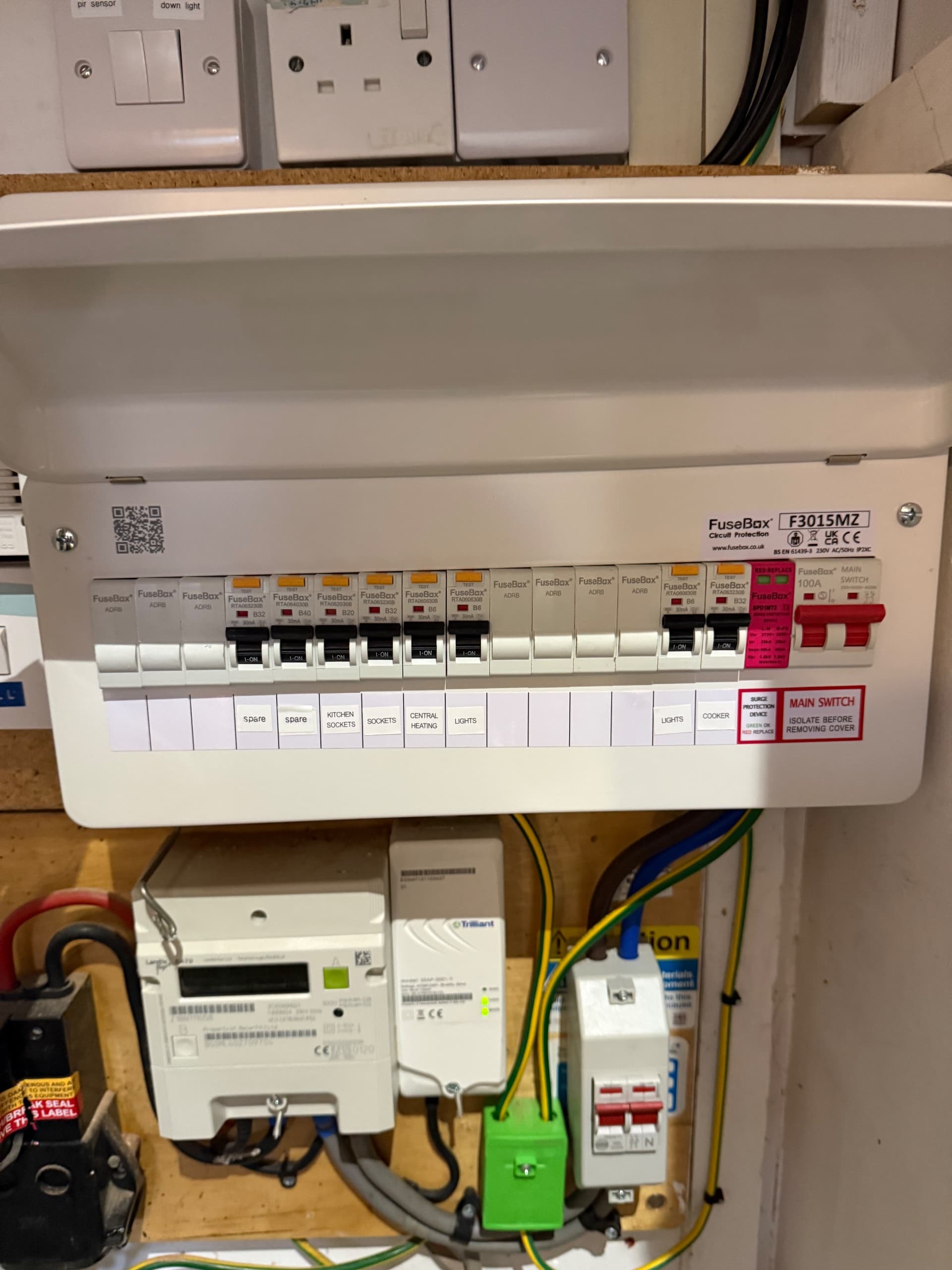
If your power keeps cutting out on wet or frosty nights, and the switch that has dropped in your consumer unit is the RCD, the most likely reason is water getting into something outside. An outdoor socket, a garden light, the cable to a shed or garage, or a set of outdoor Christmas lights can all let in enough moisture for electricity to leak to earth. The RCD spots that leak and cuts the power. It isn't broken. It's doing the job it was fitted to do.
This post explains why damp sets an RCD off, where to look, what you can safely check and when to call an electrician. You can do a few simple checks from indoors, but never open an outdoor socket, light fitting or junction box, and never keep resetting the RCD while something outside is wet.
What an RCD does and why water sets it off
An RCD (residual current device) is a safety switch in your consumer unit, the box most people still call the fuse box. It constantly compares the current going out along a circuit with the current coming back. If the two don't match, some of the electricity is escaping, usually to earth, and possibly through a person. When the difference reaches a tiny amount, typically 30 milliamps, the RCD switches off in a fraction of a second.
Water conducts electricity. When rain, condensation or frost gets inside a fitting or a damaged cable, it gives the current a path to earth that shouldn't be there. The leak is often small and only appears when things are properly wet, which is why the trips come and go with the weather.
Where the problem usually is
Damp-related trips usually trace back to something outside or in an outbuilding:
an outdoor socket whose cover has cracked, perished or been left open
garden, path or security lights, especially older fittings whose seals have aged
the supply cable to a shed, garage or garden room, which may have been damaged by digging, rodents or years in wet ground
a socket or light inside an outbuilding that suffers from condensation
outdoor extension leads and plugs left out in the rain
outdoor Christmas lights and their connectors
It isn't always outside. A leak from a bath or shower into a ceiling light, or water tracking down a wall, can do the same thing indoors. If the trips started after a leak, mention it when you call.
Why one damp light can take out half the house
Many homes have a split-load consumer unit, where one RCD protects a whole group of circuits. If a damp garden light is on one of those circuits, the RCD switches off everything in that group, so you can lose the kitchen sockets and the upstairs lights because of one fitting at the bottom of the garden.
A newer board with an RCBO on each circuit (a device that combines an RCD and a circuit breaker) keeps the trip to the circuit with the fault. That causes less disruption and makes the fault quicker to find. If your board is older and trips often, our page on fuse board upgrades explains what a modern consumer unit offers.
Safe checks you can make yourself
These checks only involve switches and plugs, never the inside of anything:
Unplug everything outside, including Christmas lights, pond pumps and extension leads, and unplug anything plugged in inside the shed or garage.
Switch off the circuit breakers (the smaller switches) in the group the RCD protects.
Reset the RCD. If it stays on, switch the circuit breakers back on one at a time.
If the RCD trips again as you switch one on, leave that one off and note which circuit it is. That's where the fault is.
If everything stays on with nothing plugged in, plug items back in one at a time to see which one causes the trip.
Stop straight away if the RCD won't reset at all, if you smell burning, or if any socket, switch or plug looks scorched or feels warm. Don't touch outdoor fittings or cables while they're wet, and never open one to dry it out.
Christmas lights and the RCD
Electrical Safety First advises using only lights made for outdoor use, marked with an IP rating (a number showing how well a product keeps out water), plugging them into an RCD-protected socket and keeping plugs and transformers indoors where you can.
If the trips started the week the lights went up, unplug them and see whether the problem stops. Wet connectors between strings are a common cause, and a set stored in a damp loft or garage can fail when it first goes out.
When it's a job for an electrician
Call a qualified electrician if the RCD trips with everything unplugged, if you can trace the trip to a circuit but not to an appliance, or if trips keep coming back after the weather dries up. The fault is then in the fixed wiring or a fitting, and finding it needs proper testing, not guesswork.
It can be something you wouldn't think of. One of our customers wrote: "Had issue with all socket tripping every few hours... Fault traced to issue with the garage which I forgot even had a socket/ power supply."
Resetting again and again doesn't fix the leak, and the same damp that trips the RCD can corrode connections over time. We explain more about that in our post on why old wiring can struggle with modern electrical demand.
How we find a damp fault
On a fault finding visit, we start by asking when the trips happen and what was running, then test the circuits one by one to narrow down where the current is leaking. An insulation resistance test shows how well each cable and fitting is keeping electricity in, and it often picks up a damp fitting or damaged buried cable even on a dry day. Then we explain what it will take to put right, whether that's a new weatherproof socket, a sealed light fitting or a new supply to an outbuilding.
If your RCD keeps tripping when it rains, WaterTight Plumbing & Electrics can find the cause and put it right safely. We're NAPIT registered electricians based in Coalville. Book a visit through our fault finding service and we'll track down where the water is getting in.
Is your RCD still tripping?
Other Articles